

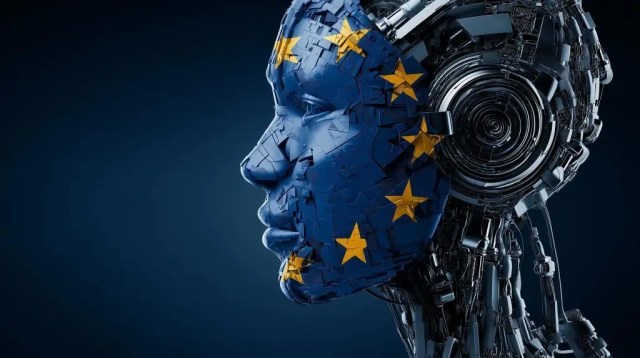
Part 1: The EU AI Act – Your New AI Playbook (No Sneaky Robots Allowed!)
So, what exactly is the EU AI Act? Officially, it’s Regulation (EU) 2024/1689, but let’s just call it “the Act.” Think of it as the world’s first major attempt to bring some order to the Wild West of AI. Its main goal? To make sure AI systems used in Europe are trustworthy, safe, transparent, and respect our fundamental rights. Basically, it wants AI to be a helpful sidekick, not a rogue supervillain. According to the official documents, the act also seeks to improve the functioning of the internal market and promote a human-centric approach to AI.
The Act uses a “risk-based” approach, which is a fancy way of saying it has different rules for different levels of AI risk:
- Unacceptable Risk (Banned!): This is the naughty list. Stuff like cognitive behavioral manipulation, social scoring (imagine being judged by an algorithm for your online behavior, Black Mirror style – creepy, right?), and real-time public facial recognition (with very few exceptions) are out. These bans actually kicked in on February 2, 2025.
- High-Risk AI: These are the systems that could seriously impact your health, safety, or rights. Think AI in hospitals, hiring processes, or law enforcement, as well as systems used in critical infrastructure and the administration of justice. These aren’t banned, but they come with a LOT of rules, like needing human oversight, solid data, and clear documentation. Most of these rules apply starting August 2, 2026.
- Limited Risk: Chatbots and deepfakes fall here. The main rule? Transparency! You need to know you’re interacting with AI.
- Minimal or No Risk: Good news! Most AI apps, like your spam filter or that AI in your video game, are largely untouched by the Act. Phew!
Even General-Purpose AI (GPAI) like ChatGPT gets a shout-out, with requirements for transparency and preventing illegal content. This phased rollout means companies have a roadmap, but the clock is ticking!
Part 2: The Global AI Tug-of-War: EU vs. US vs. China
The EU AI Act is a big deal because it sets a precedent. But how does Europe’s “rule-first” approach stack up against other global tech powerhouses? It’s like watching three different coaches approach the same game.
- The EU: The Rulebook Enthusiast. Europe is all about setting the standard. They believe strong regulation protects citizens and builds trust, which is essential for AI adoption. The goal is a human-centric AI ecosystem.
- The US: The Innovation Firster (with a side of chaos). The US has a “patchwork” approach. Instead of one big law, it’s a mix of executive orders (which can change with a new President – remember Biden’s safety-focused order getting rescinded by Trump’s “hands-off” approach in January 2025?), state-level laws (like Colorado’s AI Act), and voluntary guidelines. The focus here is heavily on fostering innovation and maintaining global leadership, sometimes with less upfront regulatory burden on companies.
- China: The Control Tower Strategist. China’s AI regulation is multi-layered and super targeted. They’ve got strict rules on data security, algorithms (how they make recommendations!), and content generated by AI, like deepfakes. A big part of their framework is ensuring AI aligns with “socialist values” and national security. They’re also an early mover on regulating generative AI, even ruling that AI-generated content can get copyright! They might even release a comprehensive national AI law soon. As of June 30, 2024, over 1,400 AI algorithms from more than 450 companies have been successfully filed with the Chinese government.
The Big Picture Difference: The EU is proactive and values fundamental rights. The US is reactive and prioritizes innovation and economic competitiveness, often relying on existing laws. China is proactive too, but their priority is state control, social stability, and becoming the global AI leader. It’s a fascinating global experiment playing out in real-time!
Part 3: Designers, Assemble! The EU AI Act’s UX Impact
If you’re in User Experience (UX) design, the EU AI Act isn’t just legal mumbo-jumbo; it’s a design brief! The Act demands a human-centered and ethical approach, pushing UX to the front lines of AI compliance. As AI systems continue to be deployed in various sectors, this is an important moment to consider ethics in design.
- Transparency is Your New Best Friend:
- “Hey, you’re talking to a bot!” If you’re designing a chatbot, users need to know right away. No more guessing games.
- Deepfakes & AI-Generated Content: If AI made that image, video, or text, it must be clearly labeled and detectable as artificially generated or manipulated. Think digital watermarks or clear on-screen badges.
- Emotion Recognition? Disclose It! If your AI is trying to read emotions, users need to be informed.
- Human Oversight: AI Needs a Co-Pilot. For high-risk AI, humans must be able to understand, intervene, and correct the system. Your interfaces need to be designed so people can easily monitor, interpret, and step in when AI goes off track or needs guidance. UX designers need to create appropriate human-machine interface tools to enable this.
- Bias Busters & Ethical Design: The Act is serious about preventing bias and discrimination. UX designers play a crucial role in ensuring AI systems are fair, inclusive, and accessible, actively working to mitigate any biases lurking in the training data.
- Accountability & Traceability: While not a direct UX task, UX designers contribute by making sure systems allow for clear logging of events and outputs, ensuring there’s a clear “paper trail” for how AI decisions were made.
- AI Literacy: Educate Your Users! The Act also wants users to understand AI better. UX designers can help by creating intuitive designs and clear explanations that demystify AI systems.
Basically, the EU AI Act is telling UX designers: “Make AI understandable, controllable, and fundamentally good for people.” It’s a huge opportunity to embed trust and ethics into the very fabric of AI.
Part 4: The Road Ahead: What’s Next in the AI Governance Journey?
The EU AI Act is here, but its journey is far from over. Here’s what’s still on the horizon:
- Staggered Rollout Continues: While some bans are in effect, most of the heavy lifting for high-risk AI systems won’t hit until August 2, 2026. And some specific systems even have until August 2, 2027, or later, with a final deadline of December 31, 2030, for certain large-scale IT systems. So, companies still have time to prepare, but it’s dwindling fast!
- More Guidance Coming: The new EU AI Office (yes, there’s a whole office dedicated to this!) will be busy churning out codes of practice for GPAI models (expected by May 2, 2025) and detailed guidelines on what exactly counts as “high-risk” AI (expected by February 2, 2026). In addition, by August 2, 2025, the Commission is expected to provide guidelines on high-risk AI incident reporting.
- Regulatory Sandboxes: Member States are setting up “AI regulatory sandboxes” by August 2, 2026. Think of these as safe, controlled environments where companies can test innovative AI under regulatory supervision without immediate fear of massive penalties. It’s about fostering innovation while figuring out the rules.
- The Big Stick: Penalties! Non-compliance isn’t cheap. Fines can go up to €35 million or 7% of a company’s global annual turnover for violating the banned AI practices, and up to €15 million or 3% for other serious infringements. Yikes!
- Global Ripple Effect: Will other countries follow the EU’s lead? Many are watching closely. The EU AI Act is effectively setting a “Brussels Effect”, where its regulations become a de facto global standard simply because companies want to operate in the lucrative European market.
The AI governance landscape is constantly evolving. The EU AI Act is a major step towards making AI more accountable and human-centric, but the global conversation is far from over. Get ready for more twists and turns as technology continues to advance and societies grapple with its profound implications!

 UX In France
Respond to The Great AI Tug-of-War: How the EU, US, and China Are Shaping Our Digital Future